Incident management · part of EngOps
Incidents that run themselves.
From the first alert to the five whys: detected, paged, diagnosed and written up, in the Slack your teams already use.
- EU-hosted
- Shadow your current tool first
- Switch team by team
- Your code never trains a model
The films
Incident management · 5 min
Friday, 6:12 p.m.
One checkout incident in Slack, from the first alert to the five whys, then severities, repeat incidents and migration.
EngOps · 5 min
Board prep in ten minutes
A CTO walks his CEO through cost, delivery, strategy and AI risk, all read from the work.
Incident management
From the first alert to the five whys
Automatic, standard and in one place. SEV1–2 page and run the full play; SEV3–4 become GitHub issues and wake nobody.
- 1
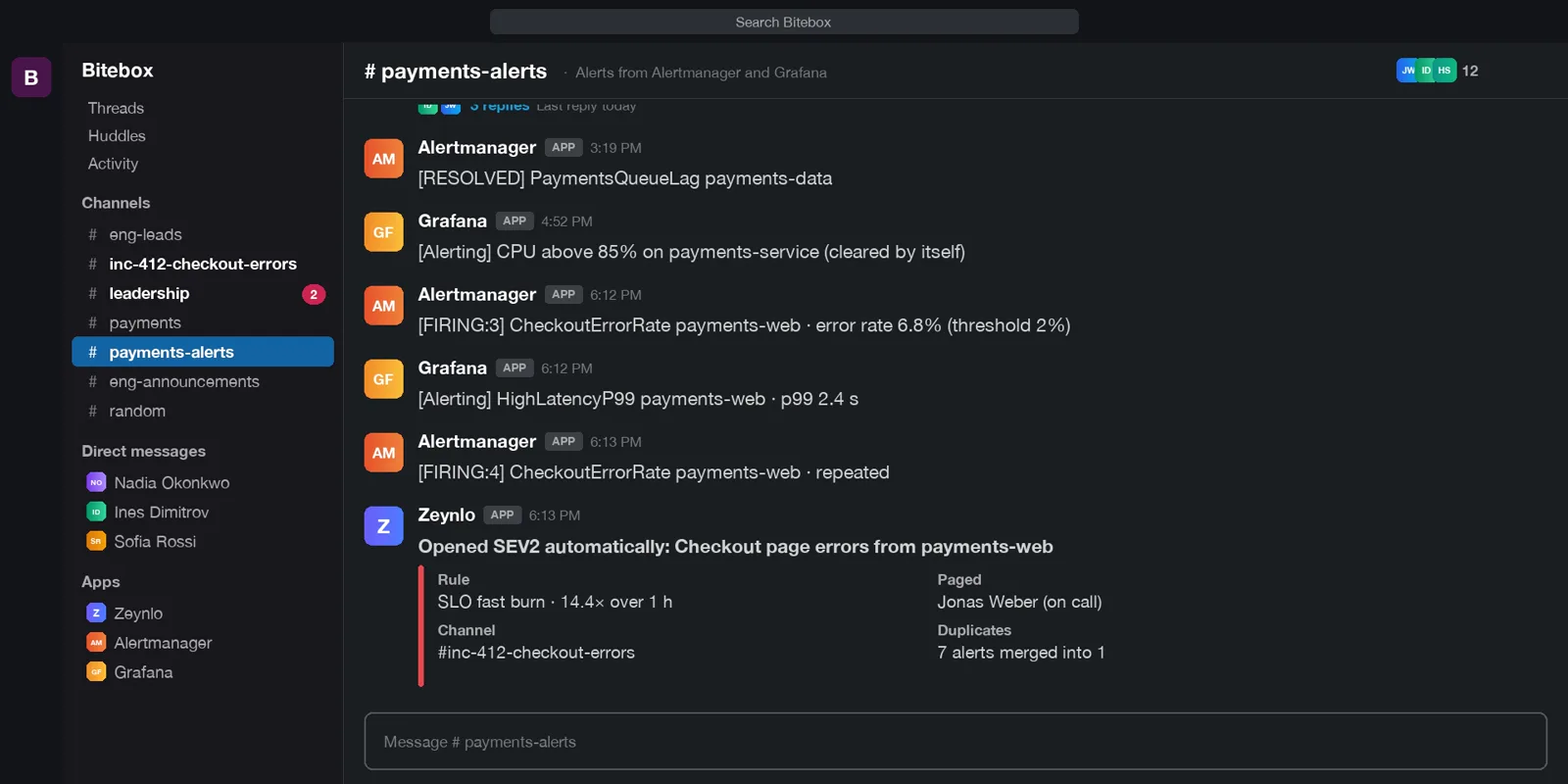
Detected and opened by rule
Alerts from your tools are merged, checked against your SLOs, and the incident opens itself.
 2
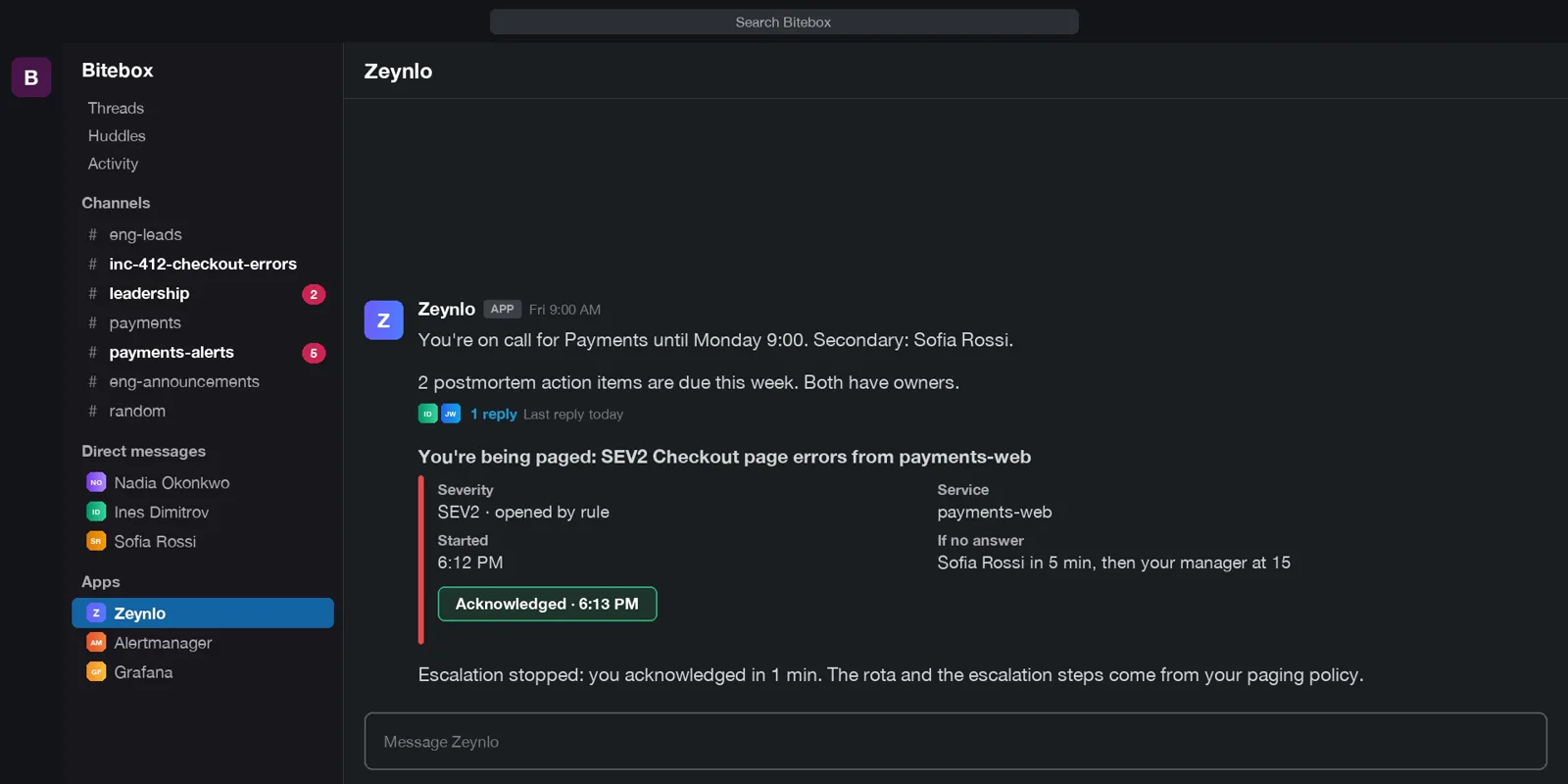
2The right person, paged
From the on-call rota, with escalation if nobody answers. Nobody has to remember who is on call.
 3
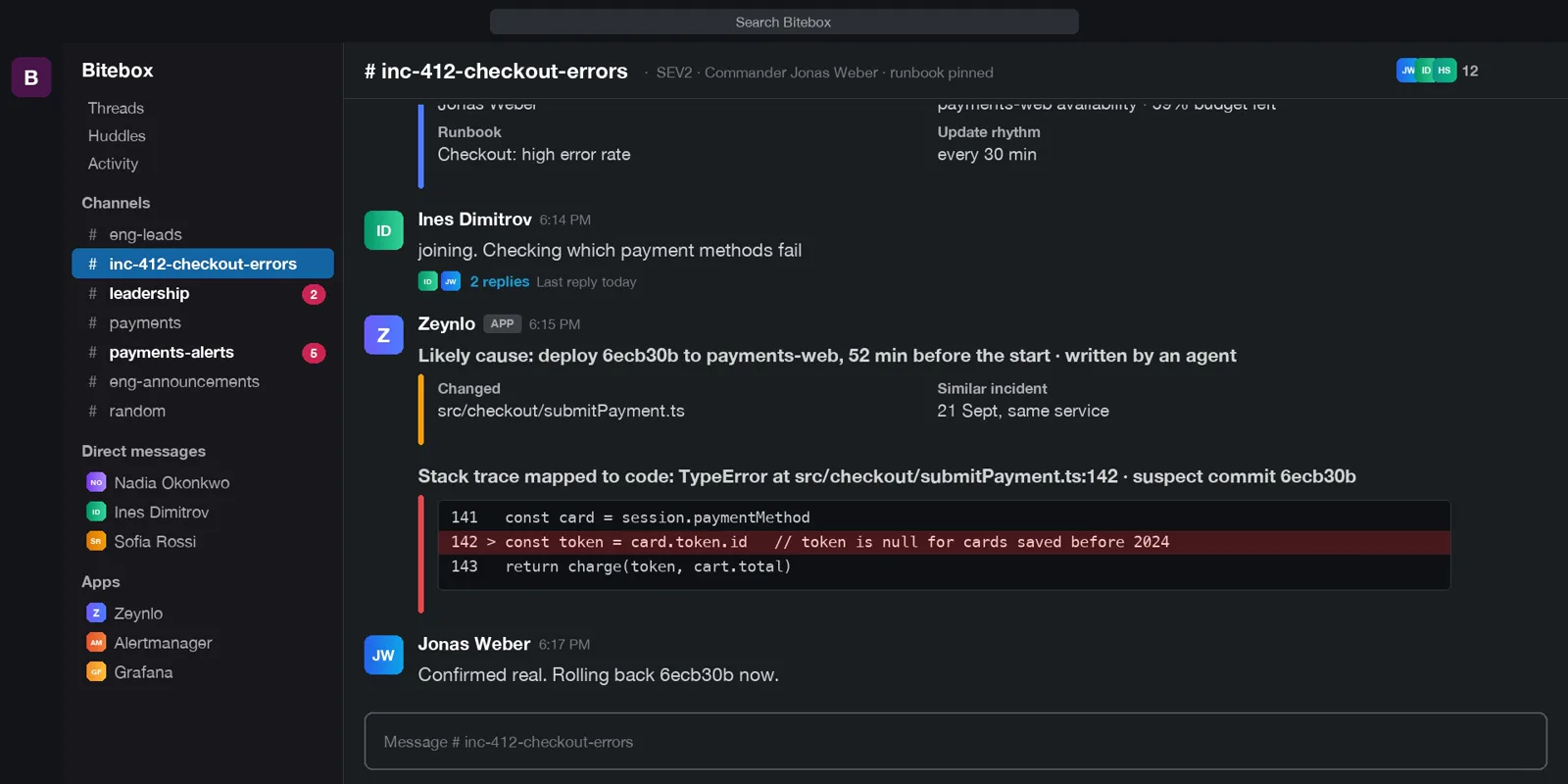
3Cause before the first log
Blast radius, the likely deploy, and the line of code from the stack trace, posted in the incident channel.
 4
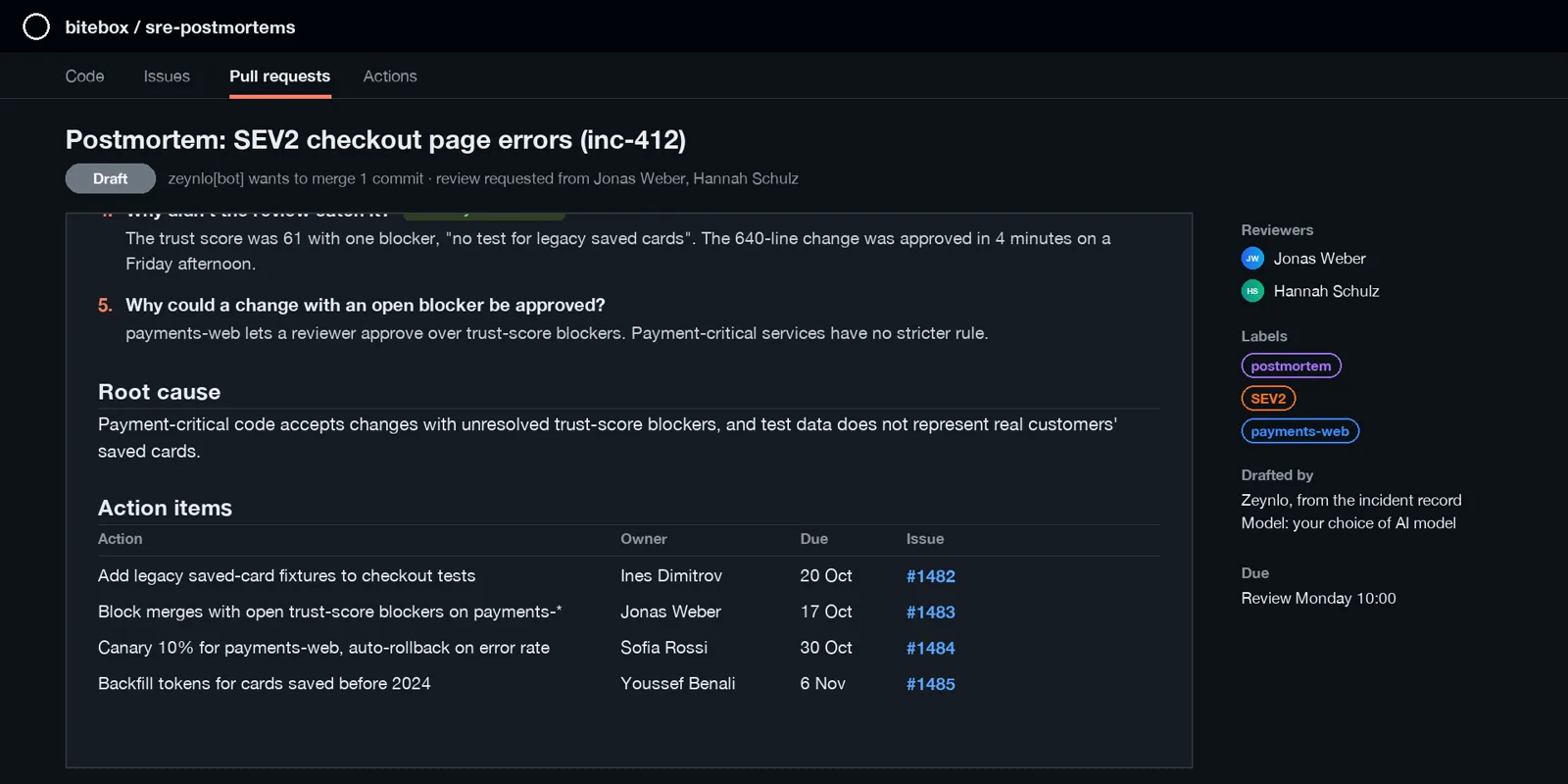
4Postmortem drafted in GitHub
Timeline, five whys and root cause filled in from the record; every action item gets an owner and a due date.
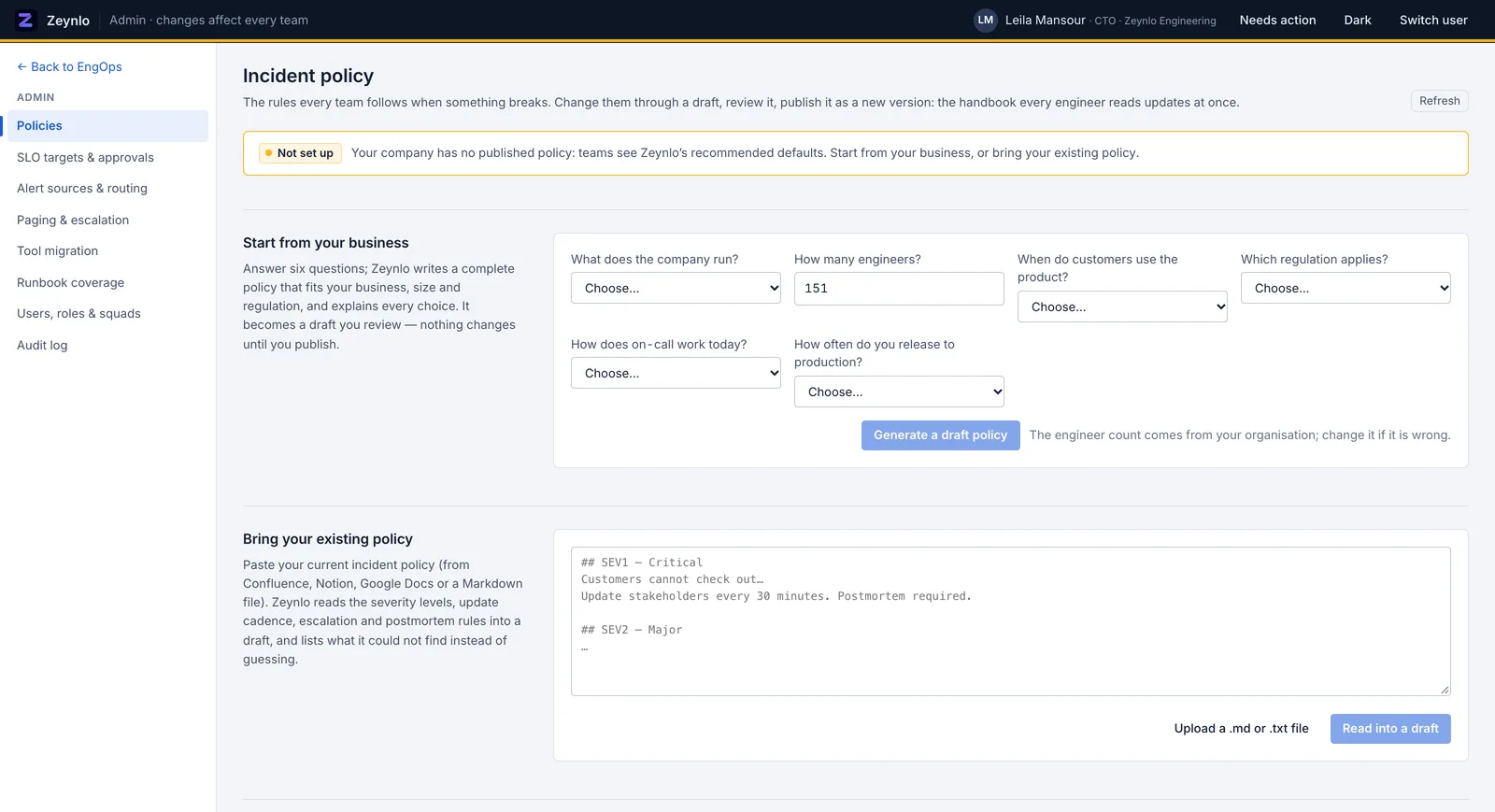
No process yet? We build it with you.
A few questions about your business, and a complete policy: severities, paging, updates and postmortems, written out for every engineer in the handbook.
Already have a tool? Shadow it, then decide.
Your tool keeps paging while Zeynlo watches the same alerts and shows what each caught, and how fast. History and policies import automatically; teams switch one at a time.
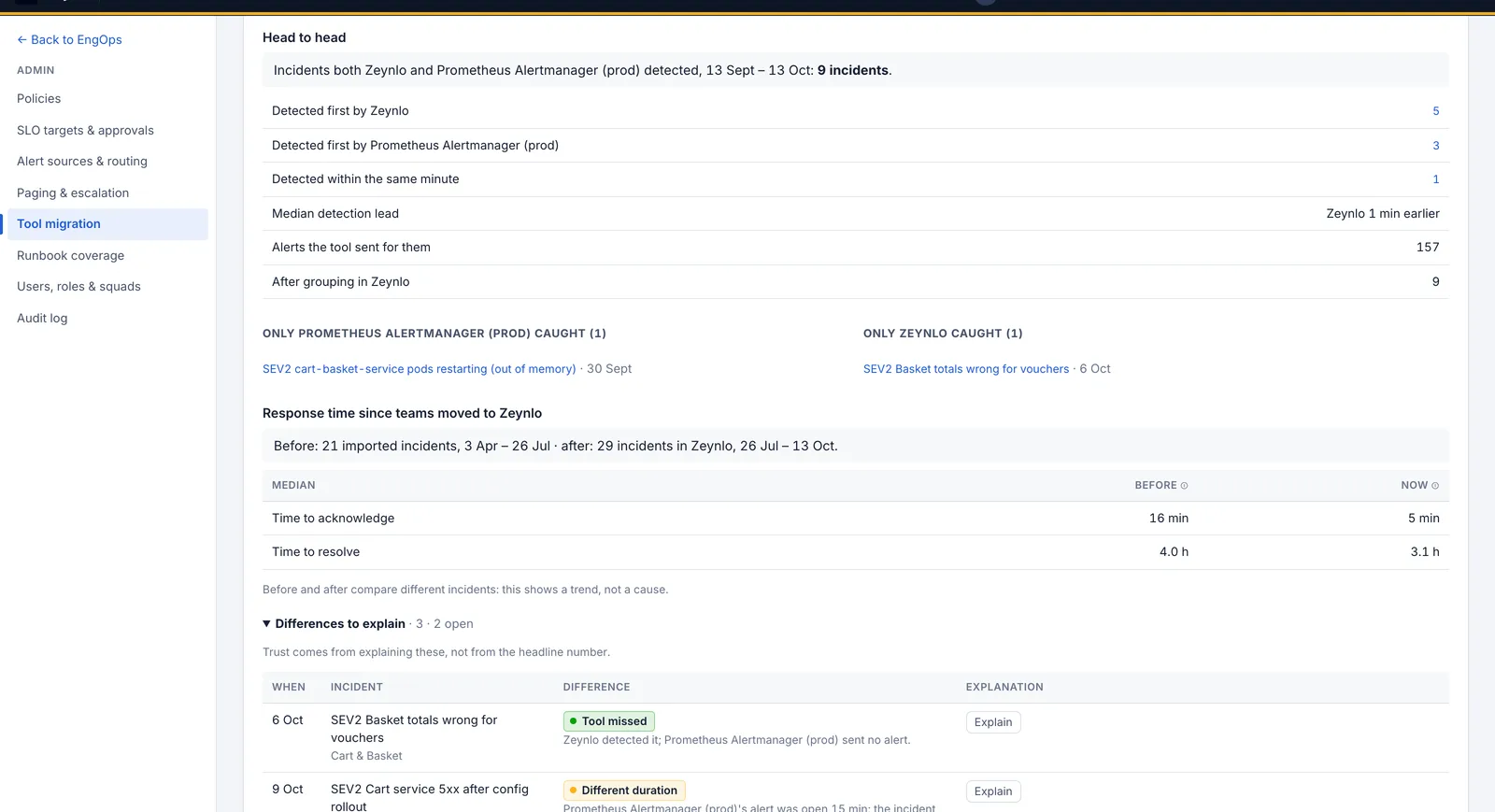
Leaving Opsgenie? It shuts down on 5 April 2027. Shadow it with Zeynlo first.
And then · EngOps
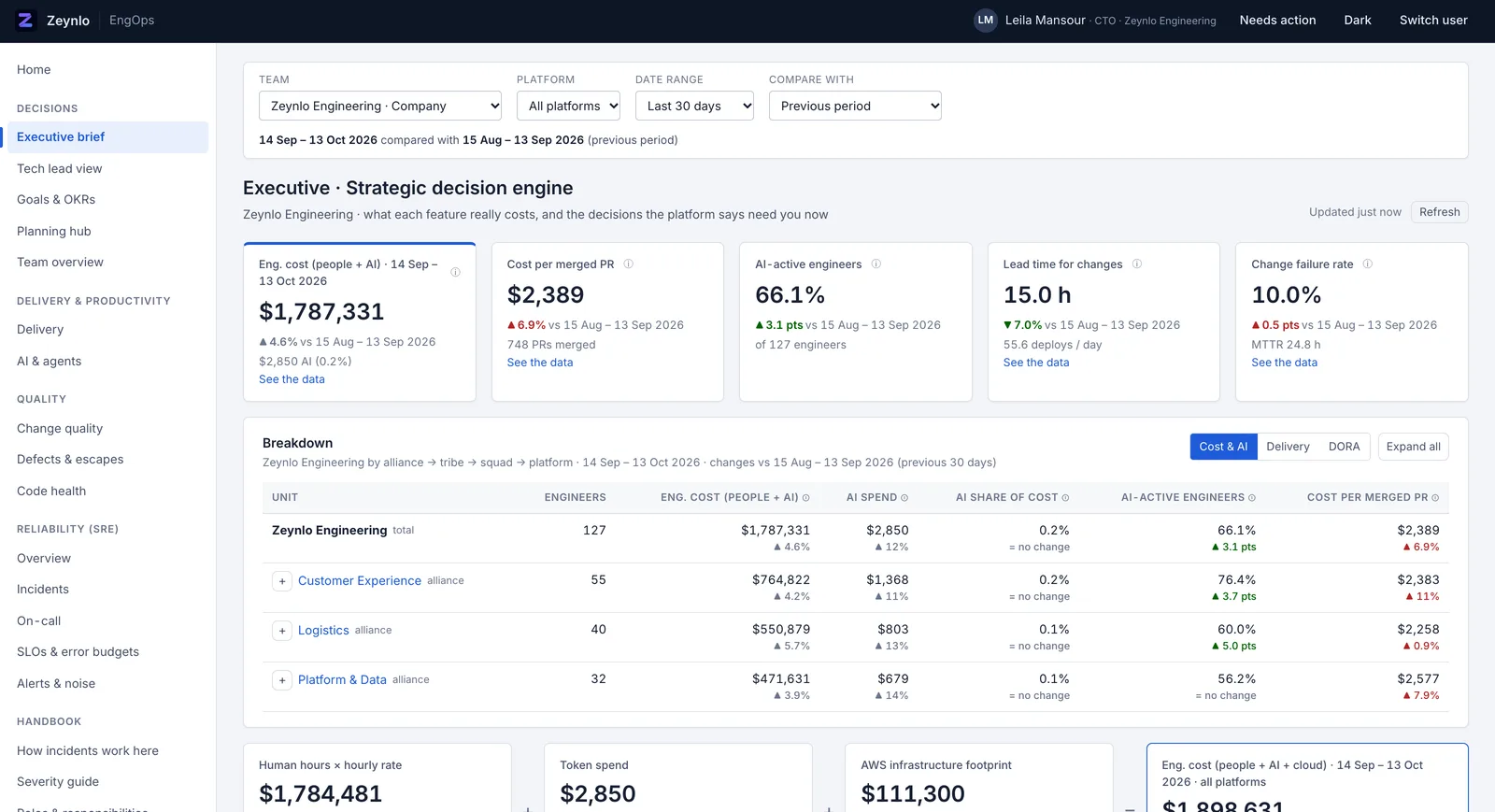
The same data runs the rest of engineering
- Requirements in GitHub
- Engineer coaching
- AI review & guardrails
- Code health
- Cost & goals
Integrations
Two connections to start. The rest is built in.
Typical setup
6+ tools to buy, connect and reconcile
With Zeynlo
2 connections, one source of truth
Connect
Two to start, about 30 minutes
- GitHubcode, reviews, deploysNeeded
- AI usageassistants and agentsNeeded
Extra, when you want them
- Chat & e-mailpages, updates and reminders where teams work
- Designdesign readiness of each epic
- Product analyticsKPIs behind your goals
- HR & payrollteams and hourly rates for true cost
- Spreadsheetsorg, goals and plans, if they live there
- Runtime telemetrySLOs and performance from your services
Built in
Nothing to integrate
- Incidents & on-call
- SLOs & error budgets
- Postmortems & follow-ups
- Delivery forecasts
- Cost per feature
- Agent guardrails
- Policies & handbook
- Goals & OKRs
Tools you already use
Keep them, or move off them at your pace
- AlertmanagerKeep or shadow
- GrafanaKeep or shadow
- Cloud MonitoringKeep or shadow
- DatadogKeep or shadow
- OpsgenieMove off
- PagerDutyMove off
- Keep or shadow: Zeynlo consumes its alerts and runs the incident, or runs beside it and compares.
- Move off: it keeps paging while Zeynlo compares, imports its history, and you switch team by team.
- Anything else connects by webhook.
Opsgenie shuts down on 5 April 2027. Shadow it now, bring its incident history over with no manual work, and move team by team to Zeynlo's built-in on-call and incidents. No big-bang cutover.
Built to be trusted
EU-first security
EU data residency, encryption in transit and at rest, and secrets and personal data stripped before any AI review.
Numbers you can check
Every figure opens to the records behind it and the calculation with that period's real counts.
Next to your tools
Start alongside what you run today. Nothing to rip out, no tickets to relabel, no status updates to write.
Built for every role
Executives, product, leads and engineers each see what they need. Personal numbers stay private to the engineer and their lead.
Answers for your security review
Your source code and telemetry stay under EU data residency.
- Where it runs
- In the EU by default, or inside your own AWS account.
- AI models
- You choose the model and its version; we recommend one. Your code and telemetry are never used to train a model.
- Before any AI sees code
- Secrets (keys, tokens, passwords) are detected and the change is stopped; e-mail addresses and phone numbers are removed.
- Data handling
- Encrypted in transit and at rest. Raw telemetry is deleted automatically after 7 days.
- Access
- Administrator approval before anyone sees data. Personal numbers are visible only to the engineer and their lead.
- Paperwork
- Mutual NDA and a data processing agreement (DPA) on request.
Prefer to talk first? Book a demo
30 minutes with the founder: a walkthrough of the product on demo data, and your questions on setup, security and the sandbox audit. Pick a date and time that suits you.
The calendar is provided by Calendly and loads its own cookies once you open it.
Apply for a shadow pilot
Zeynlo runs next to the tool you have today. It never pages while it shadows, so there is nothing to switch until you decide.
- StartA 30-minute kickoff. Your alerts are pointed at Zeynlo too, your incident history is imported, and your policy is read in or drafted with you.
- Weeks 1–3Your tool keeps paging. Zeynlo opens incidents, finds causes and drafts postmortems on the same alerts, side by side.
- ReadoutWhat each caught, missed and how fast, team by team, with the readiness checklist. You decide which team switches first, if any.